One of my least favorite misconceptions about higher education is that a bachelor’s degree (or higher) is a requirement for a successful and fulfilling career. If you’re somewhere between a high school degree and a long-term career, you’ve probably endured many probing dinner table conversations. Well-meaning family members have potentially asked when you’ll start taking your future "seriously" by enrolling in the local community college or university.
As the CEO of a skills-training provider, I know this platitude (degree = success) is misleading to those seeking an education. Alternative learning paths in higher education are often more affordable and accessible, cater to your interests and talents, and lead to real-world opportunities for life-long careers.
01 / 05Staring Down Piles of Student Loans and Lost Years
It’s no secret that higher education comes at quite a cost here in the United States. According to the 2024 Education Data Initiative, the average cost of attendance at a public 4-year in-state institution (for a student living on campus) is $27,146/year or $108,584 over four years.
That’s a mountain of debt for most Americans. Without a full-ride scholarship, family support, or another well of disposable income, higher education is unaffordable and often results in decades of loan repayment.
And for those who must work while in school, a bachelor’s degree is often more than a 4-year investment of your time. For some students, those elusive 120 credits can take 6+ years to earn.
While this traditional path to higher education works for many people, it is by no means a one-size-fits-all solution.
Put it into practice
Pick the program that teaches these skills.
Every program is certification-based and taught live by instructors.
02 / 05Who Chooses Skill-Based Training?
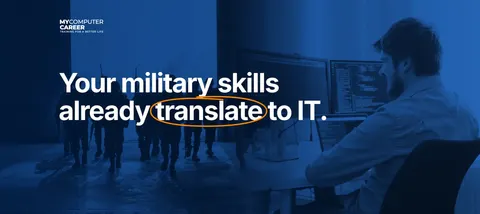
According to Opportunity @ Work, a nonprofit organization dedicated to helping people find alternate career paths, skills-based training is popular among several groups, including veterans. In fact, 61% of veterans enroll in alternative education programs. They also state that a majority of Black Americans, Hispanic Americans, and rural workers benefit from skills-based training.
03 / 05Alternative Pathways Lead to Real-World Opportunities
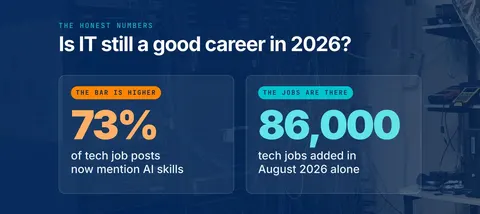
The good news is if you decide to pursue a skills-based training path to education, there are real-world opportunities for you on the other side. In fact, many employers look for areas of expertise, specialties, and certifications when hiring. The tech industry is a prime example of this.
In a recent job posting analysis, CompTIA found tech employers have been focused on skills-based hiring and "considering candidates who traveled alternate pathways to the workforce." The study also stated that nearly half of "active tech job postings" in August "did not specify a four-year degree requirement among candidates."
Another recent study in higher education from Georgetown University even predicts that numbers will flip in the coming years in favor of skills-based training. Experts posited that "only 42% of jobs in 2031 will require at least a bachelor’s degree."
Talk to an Enrollment Advisor
Programs, cost, funding and start dates, in one conversation. No obligation.
04 / 05White House Emphasizes Skills-Based Hiring in Cyber Workforce
Even the White House understands the value that comes from hiring people who have pursued a skills-based route to education. In a press release in April of 2024, officials announced a new initiative for skills-based hiring in the tech field. National Cyber Director Harry Coker, Jr. stated this new focus ensures that "more Americans will have access to cybersecurity jobs in the Federal Government."
They encourage employers in the private sector to do the same, looking for skills-based data analysts, tech support specialists, network analysts, IT project managers, and more.
05 / 05Don’t Let a Degree (or Lack Thereof) Define You
As perceptions of higher education shift and the workforce continues to adapt, skills-training providers are more important than ever. We have seen an increase in job postings that don’t require a degree, and data-backed studies continue to suggest the future is skill-based.
Whether you’re pursuing a skills-training path to a career in beauty, marketing, education, medicine, or my personal favorite, technology, there is room for you in the job market. As a skilled professional (yes, even without a bachelor’s degree) you can be a highly valuable asset to employers in any field.
Tony Galati, CEO, is an entrepreneur, teacher, and business leader who is revolutionizing vocational education with the founding and growth of MyComputerCareer, a career college for aspiring and seasoned Information Technology professionals.
FAQ
Questions about this story
Why does MyComputerCareer CEO Tony Galati advocate for alternative education pathways?
How much does a four-year public college cost according to the article?
Do tech employers hire candidates without a four-year degree?
Who chooses skills-based training instead of a traditional degree?
What has the White House said about skills-based hiring in cybersecurity?
Does skills-based training apply to fields other than technology?
Written by
MyComputerCareer Editorial Team
Career Education, Certifications & IT Workforce Research
Our editorial team partners with enrollment advisors, certification instructors, and industry employers to publish guidance grounded in real hiring data. Every article is reviewed for accuracy against current BLS labor statistics, vendor certification roadmaps, and the latest DoD Directive 8140 requirements.