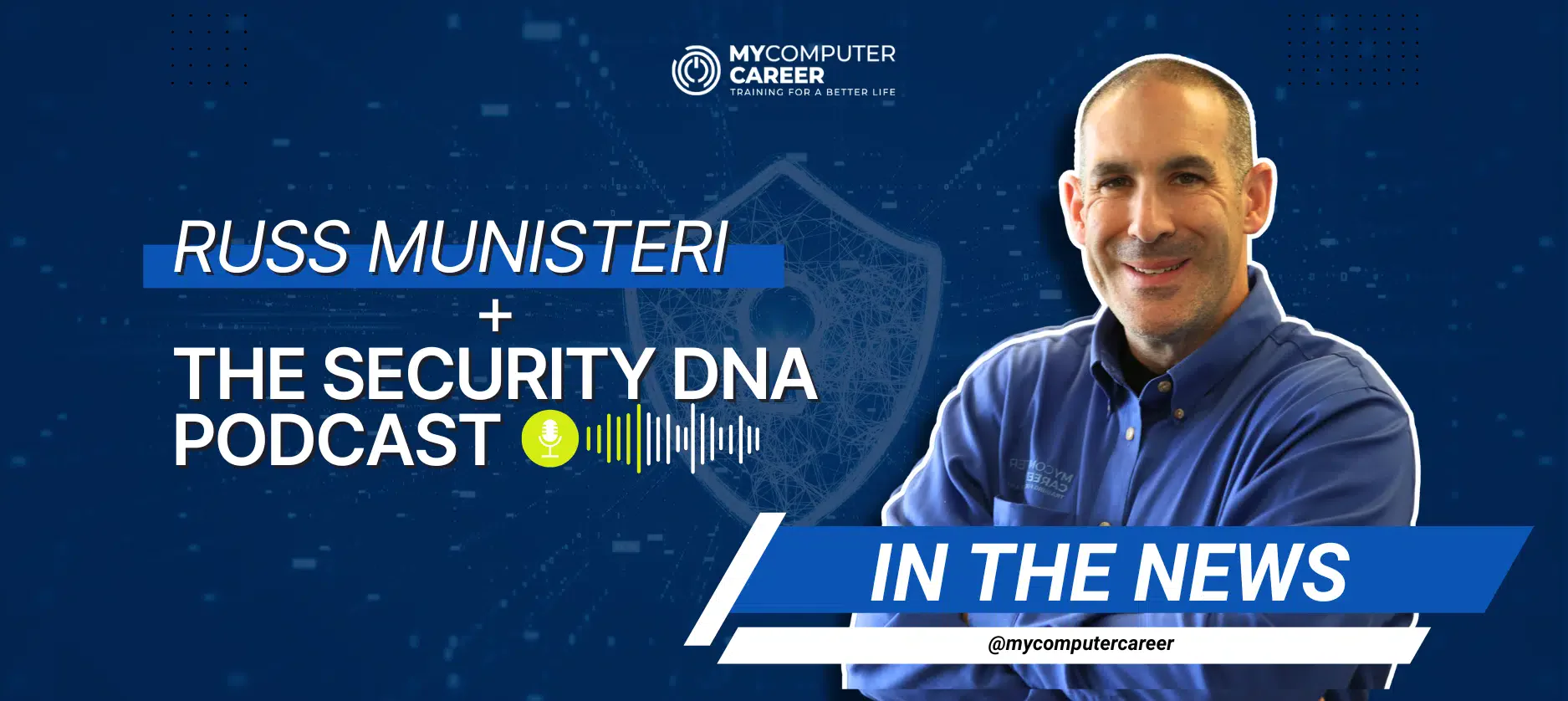
Russ Munisteri, CISSP, Program Chair & Lead Instructor at MyComputerCareer, just wrapped up an appearance on the Security DNA podcast, and his message cuts straight to what really matters in IT careers today: it’s not just about what you know now. It’s about what you’re willing to keep learning.
People Are Still Your Number One Asset
One of the strongest points Russ hammered home? Despite all the buzz around AI and automation, people remain the most critical asset in cybersecurity. "People are your number one asset," he explained. "Though the industry is changing more to data being your number one asset, people overlook it. So in my eyes, people are still number one."
AI can assist. It can speed things up. But someone still needs to make the final call. Someone needs to catch the hallucinations and bad outputs. Someone needs to understand the context. That someone is you.
Chapter 2 Starts Today
Russ talked about mindset shifts and fresh starts in a way that lands differently than typical career advice. "My new chapter begins here. Chapter 2 starts today," he told listeners. "I’m going to change my mindset. I’m going to invest in myself. I’m going to choose a road to go down in IT that makes me happy."
This isn’t motivational fluff. It’s practical reality for anyone entering or pivoting within IT. The field changes fast enough that standing still means falling behind. The good news? That same rapid change creates constant opportunities for people willing to learn.
Lifelong Learning Isn’t Optional Anymore
"It all comes down to continuous education. Lifelong learning," Russ explained. Security roles aren’t purely technical anymore. They’re becoming critical business functions that blend technical knowledge with strategic thinking. Cloud security, threat intelligence, security architecture, these skills are in demand across industries, not just traditional IT departments.
And here’s something Russ made clear: "The IT department is no longer a separate IT department. Everybody is in IT now. Everyone is in IT at some level."
What MyComputerCareer Does Differently
When asked about workforce development, Russ emphasized MyComputerCareer’s approach to student investment. "No matter what program they’re in, we’re always investing in them. And as an instructor there, I’m constantly doing that."
That commitment shows up in how programs are structured. The podcast discussion touched on something particularly interesting: the value of in-person training and replicating that experience online. There’s intention behind how students learn, not just what they learn.
From Reactive to Proactive
Russ walked through how cybersecurity has transformed from reactive firefighting to proactive defense. Early on, the industry moved faster than training programs could keep up. Professionals jumped into cyber attacks without adequate preparation simply because specialized education didn’t exist yet.
Now? The frequency and sophistication of attacks are rising faster than new professionals can be trained. Technologies like IoT, AI, and cloud computing require skills that aren’t widespread yet, creating gaps everywhere you look.
His advice? Get ahead of it. "If you are a proactive type of person, then you’re going to look for the problems rather than wait for those problems to come to you."
The CISSP Journey
Russ shared candid thoughts on earning his CISSP certification, calling it "by far the most challenging exam I have ever taken." What makes it tough isn’t just the technical depth. It’s the perspective shift. The exam approaches cybersecurity from a management angle, focusing on fixing processes rather than just technical problems.
"Once you pass the exam you are not a CISSP yet. You have to get endorsed and that’s a whole process in itself," he explained. For IT professionals eyeing management roles down the road, that certification matters.
The Bottom Line
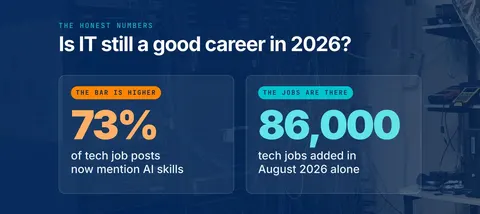
Russ’s podcast appearance reinforced something we see play out constantly in IT: technical skills get you in the door, but continuous learning keeps you relevant. The industry is creating hundreds of thousands of cybersecurity job openings through 2030, many dealing with AI and emerging technologies.
The question isn’t whether you can break into IT. It’s whether you’re ready to commit to never really finishing your education.
Want to start your chapter 2? Check out our IT and cybersecurity programs and see how MyComputerCareer invests in students who are serious about building lasting IT careers.
Talk to an Enrollment Advisor
Programs, cost, funding and start dates, in one conversation. No obligation.
FAQ
Questions about this story
What did Russ Munisteri say about AI replacing people in cybersecurity?
Why does Russ Munisteri say lifelong learning is required in IT?
How hard is the CISSP exam according to Russ Munisteri?
How has cybersecurity shifted from reactive to proactive work?
What does Russ Munisteri mean by "Chapter 2 starts today"?
How does Russ Munisteri describe MyComputerCareer's approach to students?
Written by
MyComputerCareer Editorial Team
Career Education, Certifications & IT Workforce Research
Our editorial team partners with enrollment advisors, certification instructors, and industry employers to publish guidance grounded in real hiring data. Every article is reviewed for accuracy against current BLS labor statistics, vendor certification roadmaps, and the latest DoD Directive 8140 requirements.