01 / 06From Boots to Bytes: Charting a New Course
Upon returning to civilian life, veterans often find themselves at a crossroads, seeking a new mission that values the discipline, leadership, and resolve honed in the military service. The burgeoning field of Information Technology (IT) presents such an opportunity. In this expansive realm, the qualities ingrained in military personnel are not just welcomed; they’re in high demand. Whether you’re a seasoned service member or an active-duty soldier contemplating your next steps, IT offers a promising frontier, a domain where your journey delivers more than just a job. It can lead to a fulfilling career that resonates with your core values and skills.
For veterans who may be skeptical due to a lack of IT experience, allow this guide to illuminate the path from service to success. This journey is not about forgetting the past but about leveraging your unique experiences to forge a dynamic future in the world of technology.
02 / 06Harnessing Military Skills for IT Excellence
Discipline and Dedication: The Military IT Connection
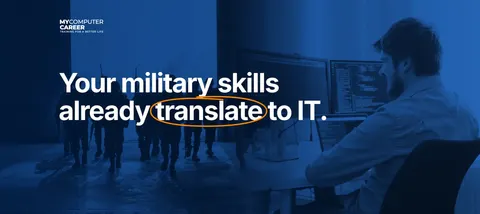
The military has equipped you with a treasure trove of characteristics well-suited for a career in IT. Discipline, a hallmark of military training, is equally crucial in IT environments where methodical approaches to troubleshooting, systematic project management, and consistent IT service delivery are valued.
Leadership and Teamwork: Your IT Force Multipliers
Leadership training and the ability to perform under pressure are equally indispensable traits in IT. Cybersecurity crises or network downtimes demand a cool head, and a veteran’s experience in high-stakes situations is invaluable. Furthermore, the teamwork and camaraderie found within military ranks have a strong parallel in IT project teams, where collaboration is key to innovation and problem-solving.
Adaptability and Problem-Solving: The IT Battlefield
Problem-solving skills are refined in the theater of combat and training exercises, but these same skills will see you conquering technical challenges rather than physical obstacles. In IT, the battleground is digital, and adaptability is your strategy for staying ahead in a constantly evolving technological landscape.
Put it into practice
Pick the program that teaches these skills.
Every program is certification-based and taught live by instructors.
03 / 06Navigating the Transition
IT Training for Veterans: A Pathway to New Opportunities
Transitioning from a military to a civilian career may seem daunting at first, particularly for those with zero IT background. However, many resources and training programs are tailored specifically to veterans, offering supportive environments where you can learn at your pace and leverage your transferable skills.
Certifications: Your IT Badge of Honor
The first actionable step for a veteran with an eye on IT is to get certified. Certifications serve as a testament to your commitment and expertise in specific areas of IT. Options such as CompTIA Security+, Network+, and Certified Information Systems Security Professional (CISSP) are excellent starting points. These certifications are respected across the industry and serve as crucial steppingstones towards more specialized roles.
Selecting the Right Training Program
When picking an IT training program, consider those that offer military benefits or are recognized by the GI Bill® ®, as they are likely to have experience in assisting veterans transition successfully. Look for programs that include certification preparation, interactive virtual lab training, and possibly job placement assistance.
GI Bill® is a registered trademark of the U.S. Department of Veterans Affairs (VA). More information about education benefits offered by VA is available at the official U.S. government website at https://www.benefits.va.gov/gibill.
04 / 06Practical Advice for Veteran Beginners in IT
Start with the Basics
If you’re feeling overwhelmed by the breadth of IT, begin with foundational courses that cover the essentials of computer systems, networking, and basic cybersecurity. These will provide a solid platform from which you can dive deeper into more complex subjects.
Leverage Your Military Experience
Use your military background to your advantage by seeking roles where security clearance is an asset. Combine your clearance with the transferable skills you’ve acquired in the military, such as leadership, problem-solving, and team collaboration. Emphasize how these capabilities, together with your security credentials, make you uniquely suited for roles that require a high level of responsibility and discretion.
Your security clearance might provide opportunities to gain even more specialized certifications and training in the IT sector. Employers who recognize the value of your clearance may be willing to invest further in your development, knowing that you can access areas within IT that are closed off to others without such clearance.
Build Your Network
Networking is just as critical in IT as it is on any military base. Connect with other veterans who have made the transition, join veteran-focused IT groups, and attend industry meetups. The insights and opportunities that come from these connections can be pivotal.
Embrace a Lifelong Learning Mindset
IT is an ever-evolving sector. Continue to learn and adapt, just as you did in the military. Pursue ongoing training, stay current with technology trends, and always be ready for the next challenge.
Talk to an Enrollment Advisor
Programs, cost, funding and start dates, in one conversation. No obligation.
05 / 06Key Takeaways and Actionable Strategies
As you consider the transition from military service to an IT career, keep these points in mind:
- Identify Transferable Skills: You already possess valuable skills such as discipline, leadership, and teamwork that are highly sought after in IT.
- Seek Veteran-Friendly Training: Look for programs that respect your service and understand your journey, offering tailored support and leveraging your unique skills.
- Acquire Certifications: Certifications are the currency of the IT realm. They validate your expertise and dedication to professional growth.
- Connect and Network: Build relationships with peers and professionals in IT. They can serve as guides, mentors, and companions on your new path.
- Embrace Continuous Learning: The IT field is always changing. Keep learning, stay flexible, and maintain the agility you honed in the military.
06 / 06Conclusion: Your Mission Awaits
Transitioning into IT is not just about swapping uniforms for tech gear. It’s about translating your existing strengths into new victories in a dynamic and rewarding field. As you embark on this mission, remember that resources and communities are ready to support you in this endeavor.
For those veterans eyeing a brave new world in IT, we at MyComputerCareer are dedicated to being part of your journey. Our comprehensive training and certification programs are designed with your service and future success in mind. Make your mark in the civilian sector and carry forward your commitment to excellence. Start your IT adventure with us today, and let’s turn your military resolve into civilian accolades.
Enlist in your IT future now and transform challenges into opportunities with MyComputerCareer. Start your new mission in IT today.
FAQ
Questions about this story
Which military skills transfer to an IT career?
What certifications should a veteran start with in IT?
How should a veteran choose an IT training program?
Does a security clearance help in an IT career?
Where should a veteran with no IT background start?
How can a veteran build a professional network in IT?
Written by
MyComputerCareer Editorial Team
Career Education, Certifications & IT Workforce Research
Our editorial team partners with enrollment advisors, certification instructors, and industry employers to publish guidance grounded in real hiring data. Every article is reviewed for accuracy against current BLS labor statistics, vendor certification roadmaps, and the latest DoD Directive 8140 requirements.